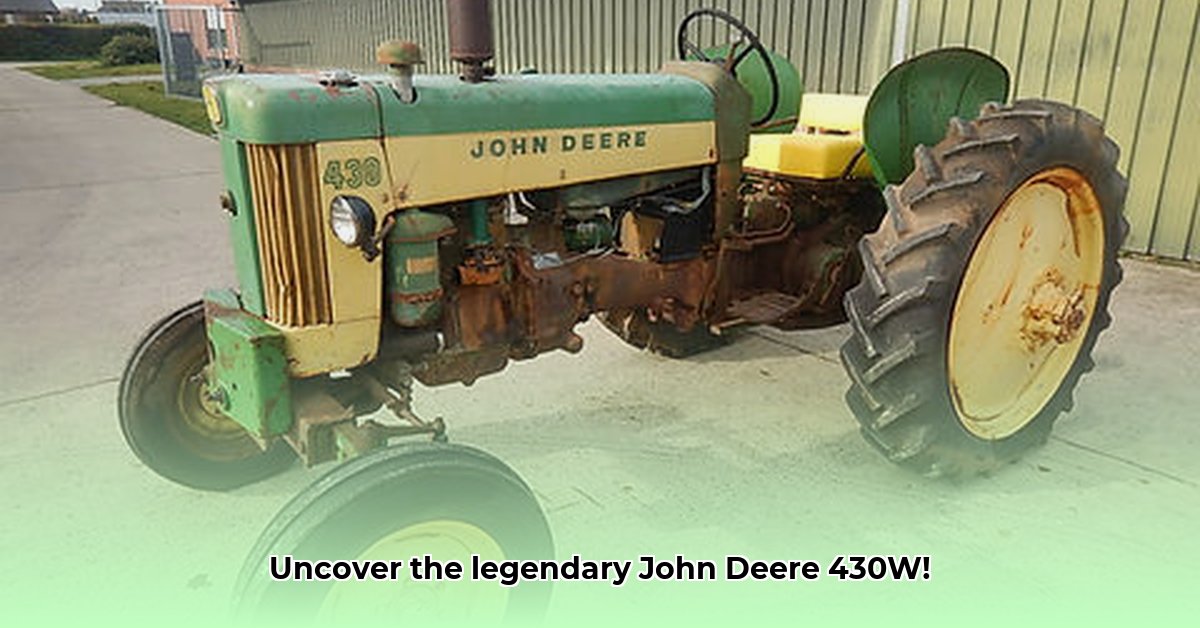
John Deere 430W Tractor: A Deep Dive into a Farming Icon
The John Deere 430W tractor: a name synonymous with rugged reliability and a vital role in the history of American agriculture. This article provides a comprehensive overview of this classic machine, exploring its technical specifications, historical context, and enduring legacy among collectors and enthusiasts. We'll uncover the details, from its powerful engine to its various configurations, and even offer insights for those considering a restoration project. For more on smaller John Deere tractors, see information on the John Deere 110.
Powering the Past: The 430W's Mechanical Heart
The John Deere 430W's engine was a robust two-cylinder powerhouse, boasting a displacement of 1.9 liters. Farmers enjoyed the flexibility of choosing between gasoline, all-fuel (capable of running on various fuels), or liquid propane (LP) gas, a crucial advantage given the fuel landscape of its era. Determining the exact horsepower proves challenging due to variations in testing methods and engine condition, with estimates ranging from approximately 24 to over 41 horsepower. This highlights the complexities of researching vintage equipment, emphasizing the need for careful source evaluation.
Shifting Gears and Expanding Capabilities: Transmission and PTO
The 430W typically featured a four- or five-speed unsynchronized transmission. While requiring skill to operate smoothly, it provided the reliability expected by experienced farmers. The standard 540 rpm rear power take-off (PTO) significantly expanded the tractor's functionality. This allowed for the connection of PTO-driven implements, such as hay balers and tillers, transforming the 430W into a versatile workhorse capable of a wide array of farm tasks. Was this versatility a key factor in its success? Further research into contemporary sales data could provide a definitive answer.
Model Variations: Tailoring to Farming Needs
John Deere produced several variations of the 430, each designed for specific agricultural applications. The "W" likely denotes a standard configuration, but other models included the 430T (tricycle model), 430S, 430U, 430H, 430V, and 430C. Precise differences between these models require further investigation, but this diversity indicates a strategic approach to meeting varied farming needs. Visual documentation of these variants would be hugely beneficial for researchers and enthusiasts alike. How many variations were truly produced? Further systematic analysis of production records should yield more precise numbers.
Production and Market Context: A Niche Player?
Estimates suggest approximately 14,385 John Deere 430 tractors (all variants) were manufactured between 1958 and 1960. While significant, comparing this to competitors' production volumes during that period requires additional research to accurately assess its market share and competitive positioning. Its price point and specialized configurations may have influenced its market penetration. A detailed analysis of contemporary sales data would be needed to definitively conclude its market standing.
A Legacy of Influence: Shaping Future Designs
While not the most prolific model in its time, the 430W's impact is likely under-appreciated. Experts suggest that its design and engineering choices influenced subsequent John Deere tractors. Identifying these specific innovations and tracing their evolution through subsequent models remains an intriguing area of study for agricultural historians. What specific design features of the 430W have proven impactful? A comparative analysis of design blueprints across various Deere models across several decades is needed.
Collectors and Restorers: Preserving a Piece of History
The John Deere 430W holds a special place among vintage tractor collectors and restorers. Sourcing parts for restoration presents a unique challenge, underscoring the value of online forums and specialized parts suppliers. Documenting common restoration challenges and solutions would be invaluable to this community, fostering collaboration and preservation efforts. What are the biggest hurdles faced by restorers? A survey of restorers would provide a detailed view into these challenges.
Key Specifications at a Glance
| Feature | Specification | Notes |
|---|---|---|
| Engine | 1.9L, 2-cylinder | Gasoline, All-Fuel, or LP Gas options available |
| Horsepower | Approximately 24-41 hp | Varies depending on source and measurement method |
| Transmission | 4-speed or 5-speed unsynchronized | |
| PTO | 540 rpm | Standard rear PTO |
| Wheelbase | 85 inches (likely) | |
| Total Production | Approximately 14,385 (all variants) | Based on available data, subject to refinement |
Conclusion: A Continuing Story
The John Deere 430W's story is far from complete. As research continues, we'll undoubtedly refine our understanding of its impact on the agricultural landscape and its lasting influence on tractor design. The tractor remains a testament to the enduring legacy of durable and adaptable farm equipment. The ongoing efforts of collectors and enthusiasts ensure that the story of this iconic machine continues to be told.